The kitchen, often the heart of the home, can quickly become a battleground against smoke, grease, and lingering odors. A reliable range hood is your best defense, ensuring clean air and a comfortable cooking environment. The IKTCH 30-Inch Under Cabinet Range Hood often catches the eye with its sleek design, competitive price, and ambitious claims of 900 CFM power and innovative gesture control. But does this budget-friendly option truly deliver on its promises, or are there hidden drawbacks beneath its modern exterior?
This comprehensive review delves into the IKTCH 30-Inch Under Cabinet Range Hood, dissecting its features, evaluating its real-world performance, and comparing it against crucial buying factors. We’ll help you navigate the specifications and user experiences to determine if this model is the right fit for your culinary needs and kitchen space.
Understanding Range Hood Types for Your Kitchen
Before diving into the specifics of the IKTCH, it’s helpful to understand the landscape of kitchen ventilation. Range hoods come in various styles, each suited for different kitchen layouts and aesthetic preferences.
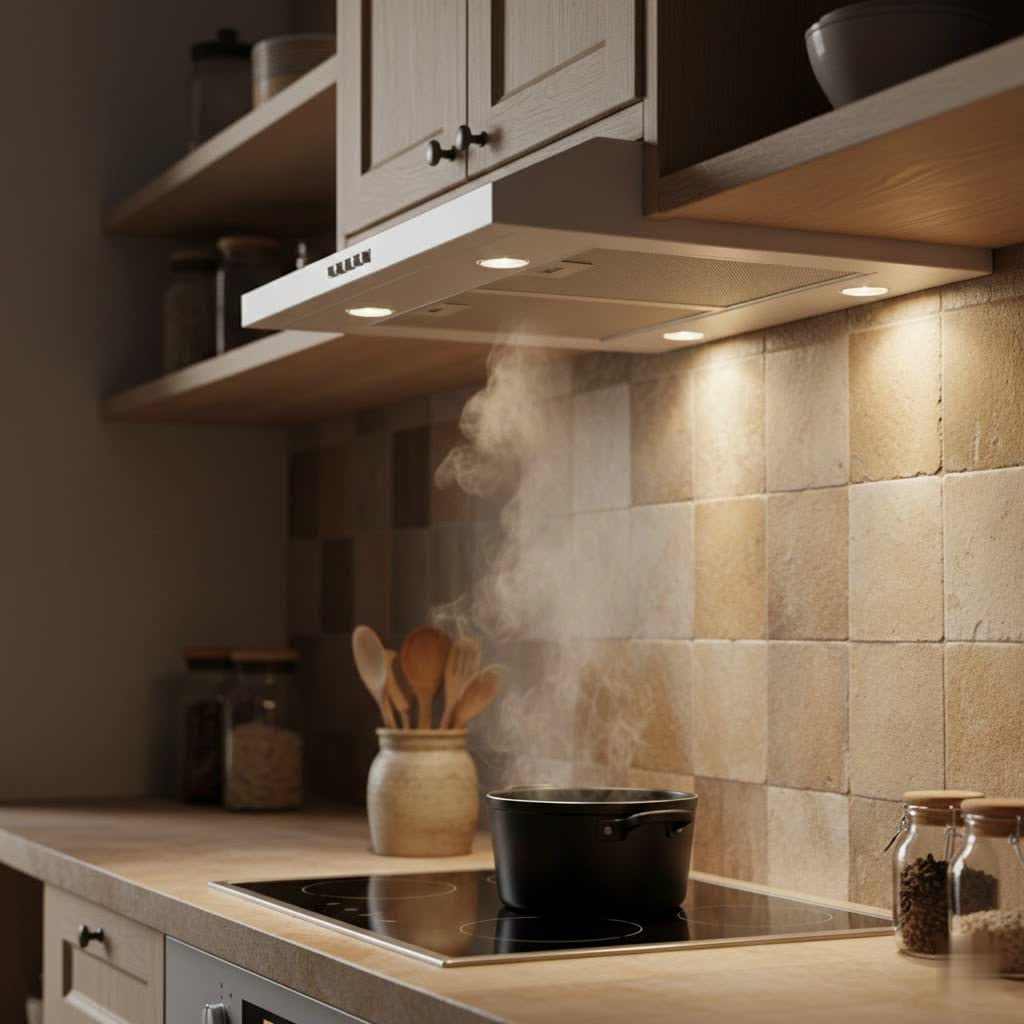
- Under-Cabinet Range Hoods: As the name suggests, these are installed directly beneath your kitchen cabinets, typically above the cooktop. They are a popular choice for their space-saving design and integrated look, fitting seamlessly into existing cabinetry. They are often chosen during kitchen renovations or for maximizing overhead storage.
- Wall-Mount Range Hoods: These hoods attach directly to the wall above the range, making a visual statement and often resembling a chimney.
- Island Range Hoods: Designed for cooktops located in a kitchen island, these hoods hang from the ceiling, venting fumes upwards.
- Insert/Built-In Range Hoods: These models are hidden within custom cabinetry or a decorative hood cover, offering a completely integrated and minimalist appearance. The IKTCH 30-inch model falls into this category, designed to be built into your existing cabinet structure.
- Downdraft Range Hoods: Less common, these units rise from the countertop behind or beside the cooktop and pull air downwards.
Each type offers distinct advantages, but under-cabinet (or insert) models like the IKTCH are a workhorse for many homes, balancing functionality with a tidy footprint.
IKTCH 30-Inch Under Cabinet Range Hood: Features at a Glance
The IKTCH 30-Inch Under Cabinet Range Hood presents an appealing package of features, aiming to blend modern technology with effective ventilation.
- Design & Aesthetics: Crafted from stainless steel and featuring a tempered glass opening baffle, this hood boasts a sleek, contemporary design that integrates beautifully into modern kitchens. It’s often praised for its attractive, minimalist appearance.
- Power & Performance (Claimed): IKTCH advertises a powerful 900 CFM (Cubic Feet per Minute) motor, designed to efficiently remove smoke and odors. It features a 4-speed exhaust fan to adjust to varying cooking intensity.
- Control Methods: A standout feature is its innovative gesture sensing, allowing you to control fan speeds and lights with a simple wave of your hand. It also includes a touch control panel and a remote control for traditional operation.
- Lighting: Equipped with two 3W LED lights, the hood offers adjustable brightness settings to illuminate your cooking area.
- Filtration: The hood uses two removable aluminum mesh/stainless steel baffle filters, which are designed for easy cleaning and are often dishwasher-safe.
- Noise Level (Claimed): The manufacturer states a quiet operation, ranging from a whisper-quiet 40dB at its lowest speed to 65dB at its highest setting.
- Warranty: IKTCH offers a 5-year warranty, suggesting confidence in their product’s durability.
These features, particularly the high CFM and gesture control, position the IKTCH as an attractive option for those seeking advanced functionality at a competitive price point.
In-Depth Review: The Real Performance of the IKTCH 30-Inch
While the advertised features paint an optimistic picture, real-world user experiences often reveal a different story for the IKTCH 30-Inch Under Cabinet Range Hood.
Suction Power: The 900 CFM Debate
|
Our Picks for the Best Range hood in 2026
As an Amazon Associate I earn from qualifying purchases.
|
||
| Num | Product | Action |
|---|---|---|
| 1 | IKTCH 30-inch Wall Mount Range Hood 900 CFM Ducted/Ductless Convertible, Kitchen Chimney Vent Stainless Steel with Gesture Sensing & Touch Control Switch Panel, 2 Pcs Adjustable Lights(IKP02-30'') |

|
| 2 | Broan-NuTone BCSQ130SS Three-Speed Glacier Under-Cabinet Range Hood with LED Lights ADA Capable, 1.5 Sones, 375 Max Blower CFM, 30-Inch, Stainless Steel |
|
| 3 | SNDOAS 30 inch Range Hood Ducted/Ductless Convertible Stainless Steel Range Hood Under Cabinet with Rocker Button Control,Vent Hood with LED Light,2 Speed Exhaust Fan,Under Cabinet Hood,Silver |
|
| 4 | Broan-NuTone 413001 Non-Ducted Ductless Range Hood with Lights Exhaust Fan for Under Cabinet, 30-Inch, White |
|
| 5 | COMFEE' CVU30W2AST Range Hood 30 Inch Ducted Ductless Vent Hood Durable Stainless Steel Kitchen Hood for Under Cabinet with 2 Reusable Filter, 200 CFM, 2 Speed Exhaust Fan Silver |
|
| 6 | Empava Wall Mount Range Hood 30 Inch, Ducted/Ductless Kitchen Exhaust Stove Vent with Modern Style, 400CFM, 3-Speed, Touch Control, Timer, LED Lights, Stainless Steel (Charcoal-Filter Sold Separately) |
|
| 7 | COMFEE' CVU30W4AST 30 inch Under Cabinet Ducted/Ductless Convertible Slim Vent Durable Stainless Steel Kitchen Reusable Filter, 3 Speed Exhaust Fan and 1 LED Lights Range Hood, 2.0 Version |
|
| 8 | VIKIO HOME Wall Mount Range Hood 30 inch, 580 CFM, Ducted/Ductless Convertible, Stainless Steel Kitchen Vent Hood with 3-Speed Fan and LED Lights |
|
| 9 | AMZCHEF Under Cabinet Range Hood 30 Inch, 750CFM Stainless Steel Kitchen Stove Vent Hood 3 Speed Exhaust Fan Touch/Remote/Gesture Control LED lights Time Setting Dishwasher-Safe Baffle Filters |
|
| 10 | COSMO COS-63175S 30 in. Vista Collection 380 CFM Ducted Wall Mount Range Hood, Touch Controls, LED Lights, Stainless Steel |
|
The claim of 900 CFM is a major selling point, suggesting robust ventilation capable of handling heavy cooking. However, a significant number of users report that the actual suction power is underwhelming, failing to effectively clear smoke and grease, especially during intense cooking sessions. Some buyers have even compared its performance unfavorably to older range hoods with lower CFM ratings, suggesting that the advertised figure might not translate into real-world efficiency. This discrepancy leads to frustration, particularly for those who frequently engage in high-heat or Asian-style cooking that produces substantial fumes.
“Multiple buyers say this thing barely pulls smoke or grease; some compare it to older 300 to 400 CFM hoods that perform better. A loud fan with weak suction is not power, it’s just noise.”
Noise Level: Quiet or a “Jet Engine”?
IKTCH promotes a quiet operation, with a maximum noise level of 65dB. Yet, user reviews frequently contradict this. Many report that the range hood becomes excessively loud on higher settings, sounding more like a “jet engine” than a kitchen appliance. Even on lower settings, the noise can be considerable, making conversations difficult and diminishing the cooking experience. Some users have even observed cabinet rattling due to vibration, indicating potential issues with internal balancing or installation stability.
Gesture Control: Innovation or Gimmick?
The gesture sensing feature, touted as a convenience for messy hands, often proves to be a source of frustration. Many users find it to be inconsistent, failing to recognize hand movements reliably or stopping working altogether. This leads users to resort to the touch control panel or remote control, effectively defeating the purpose of the hands-free innovation. While a novel idea, its unreliable implementation can make it feel more like a gimmick than a truly valuable feature.
Lighting Quality
The inclusion of LED lights is a common modern feature, but the IKTCH’s 3W LED lamps have drawn criticism. Users frequently describe the lighting as “horrible” or “dim,” barely illuminating the cooking area adequately. This can hinder visibility and practicality, especially during evening cooking. While some report adjustable brightness, the overall efficacy for task lighting seems to be a recurring concern.
Design & Build Quality
On the positive side, the IKTCH range hood generally receives praise for its “sleek modern look” and stainless steel finish, which can enhance kitchen aesthetics. The baffle filters are also noted for being easy to remove and clean, often being dishwasher-safe. However, some reports of vibration on higher speeds, along with a “Fakespot Reviews Grade: D” for review authenticity on an IKTCH wall mount model, raise questions about overall build consistency and brand trustworthiness.
Maintenance
The dishwasher-safe baffle filters are a definite advantage, simplifying the cleaning process and promoting better hygiene. This ease of maintenance is a point where the IKTCH generally meets expectations.
In summary, while the IKTCH 30-Inch Under Cabinet Range Hood offers an attractive design and feature set at a competitive price, its core performance—particularly suction power, noise, and the reliability of its advanced controls—often falls short of user expectations and advertised claims.
Key Factors to Consider When Buying a Range Hood
Choosing the right range hood involves more than just aesthetics. Here are the critical factors to evaluate, keeping the IKTCH 30-inch model’s performance in mind:
CFM (Cubic Feet Per Minute)
CFM indicates how much air a range hood can move per minute, directly impacting its ability to clear smoke and odors. For ducted range hoods, a common calculation is to determine your kitchen’s volume (Length x Width x Height) and divide by four, aiming to replace the air every four minutes. For electric cooktops, a general rule is 100 CFM per 10,000 BTUs of cooking power (or around 400 CFM for a standard electric stove), while gas cooktops often require 100 CFM per 10,000 BTUs. Heavy cooking, especially frying or stir-frying, demands higher CFM. While the IKTCH claims 900 CFM, actual user experiences suggest its effective CFM might be considerably lower, meaning it may not adequately handle intensive cooking despite the high number.
Noise Level (Sones/dB)
Range hoods operate with a fan, generating noise. This is measured in sones or decibels (dB). A quiet range hood typically operates below 60 dB on its highest setting. While the IKTCH advertises a 40dB low speed and 65dB high speed, multiple users report it being uncomfortably loud, particularly on higher settings. For a peaceful cooking experience, paying attention to user reviews regarding actual noise is crucial, as advertised figures don’t always reflect real-world sound.
Size & Fit
The range hood should ideally be at least as wide as your cooktop, and for optimal capture, some experts recommend it extending 1 to 3 inches beyond the cooktop on each side. Standard under-cabinet range hoods are typically 30 inches or 36 inches wide. Mounting height is also important, generally 24-30 inches above the cooktop, though manufacturers’ guidelines should always be followed. The IKTCH 30-inch model is designed for a 30-inch cooktop, fitting a common kitchen size. Ensure your cabinet depth (typically 12-13 inches) accommodates the unit.
Ventilation Type (Ducted vs. Ductless)
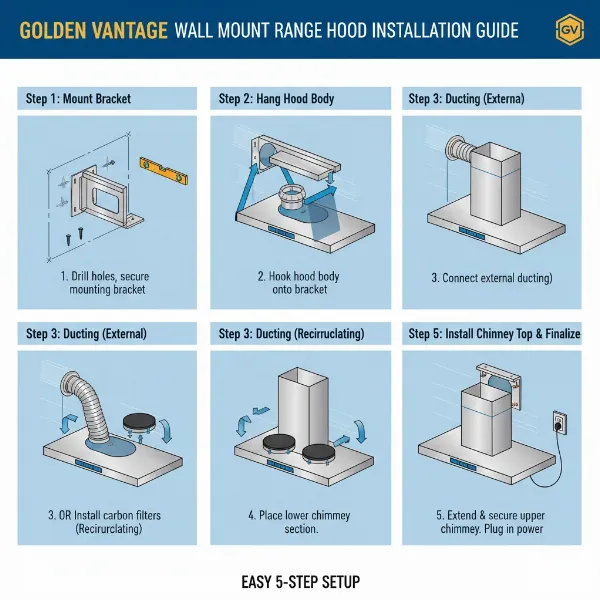
- Ducted systems vent smoke, grease, and odors outside your home via a duct system. They offer the most effective removal of contaminants and heat.
- Ductless (recirculating) systems filter the air through charcoal filters to remove odors and some grease, then recirculate the cleaned air back into the kitchen. These are less effective at removing heat and moisture and require regular filter replacement.
The IKTCH range hood is typically convertible, meaning it can be installed for either ducted or ductless operation. For optimal air quality, a ducted system is always preferred.
Filter Type
Range hoods commonly use mesh, baffle, or charcoal filters:
- Mesh filters are basic and effective but can clog easily and are harder to clean.
- Baffle filters (like those in the IKTCH) are more durable, more effective at trapping grease, and generally easier to clean, often being dishwasher safe.
- Charcoal filters are used in ductless systems to absorb odors and require periodic replacement (every 3-6 months).
Additional Features
Consider what features genuinely add value to your cooking experience:
- LED Lights: Essential for illuminating your cooktop. As noted, IKTCH’s lights have received mixed reviews for brightness.
- Timer: A convenient feature for automatic shut-off after cooking.
- Smart Features: Wi-Fi connectivity, app control, or auto-sensing fans are found in higher-end models, offering convenience, but the IKTCH’s gesture control has proven unreliable.
Material & Durability
Stainless steel, like that used in the IKTCH, is a popular choice for range hoods due to its sleek appearance, durability, and ease of cleaning. Consider the gauge of the steel and overall construction quality for long-term performance.
Budget & Brand Reputation
Range hoods vary widely in price, from entry-level to high-end professional models. IKTCH often falls into the mid-range in terms of features for its price, making it an attractive “budget-friendly” option. However, concerns about the authenticity of reviews and inconsistencies in performance should lead buyers to approach with caution and prioritize brands with a proven track record for reliability and customer support.
Top Under Cabinet Range Hoods: IKTCH and Alternatives
When evaluating under-cabinet range hoods, the IKTCH 30-inch model presents itself as a feature-rich, affordable option. However, its perceived value is heavily balanced by user feedback on core performance.
An ideal under-cabinet range hood would offer genuinely powerful suction (e.g., a true 600-900 CFM), operate quietly, feature reliable controls, and provide bright, effective lighting. Reputable brands in the ventilation space (like Zephyr, Hauslane, or Broan) often command higher prices but typically deliver more consistent performance, robust build quality, and superior customer support. These brands often invest more in motor technology to ensure high CFM ratings translate to effective smoke extraction with manageable noise levels.
The IKTCH 30-inch Under Cabinet Range Hood can be considered for budget-conscious buyers who prioritize a modern aesthetic and are willing to potentially compromise on consistent high-performance. It offers a contemporary look and convenient features like dishwasher-safe baffle filters. However, for those who frequently engage in heavy cooking or prioritize a quiet kitchen and reliable controls, investing in a model with a more established track record for performance and user satisfaction, even at a higher price point, might be a more worthwhile decision. The allure of high CFM and smart features at a low cost can be tempting, but the reality of its operation suggests it’s crucial to manage expectations regarding its real-world capabilities.
Comprehensive Buying Guide for Your Next Range Hood
Choosing the perfect range hood involves careful consideration of your specific needs, kitchen layout, and priorities. Here’s a guide to help you make an informed decision:
- Set Your Budget: Range hoods vary significantly in price. Determine how much you’re willing to spend, keeping in mind that higher prices often correlate with better performance, quieter operation, and more durable materials. The IKTCH sits at an appealing price point for its advertised features, but consider if saving upfront might lead to dissatisfaction later.
- Assess Your Cooking Habits: If you cook infrequently or prepare light meals, a lower CFM and simpler model might suffice. However, for frequent, heavy cooking—especially involving frying, grilling, or high-heat methods—a genuinely powerful range hood with high effective CFM is essential to maintain good air quality.
- Measure Your Space Accurately: This is non-negotiable. Measure the width of your cooktop, the depth of your cabinets, and the available height above your range. Ensure the hood you choose is at least as wide as your cooktop for optimal capture. Also, consider ductwork requirements and available space for venting if opting for a ducted system.
- Consider Brand Reputation & Diverse Reviews: Don’t rely solely on manufacturer claims or a few glowing reviews. Look for patterns in feedback across multiple platforms. Pay close attention to complaints about suction power, noise levels, and feature reliability, as these are common areas where cheaper models often fall short, as seen with the IKTCH.
- Check Warranty & Support: A good warranty, like IKTCH’s 5-year offering, provides peace of mind. Equally important is accessible and responsive customer support in case issues arise. Research the brand’s reputation for after-sales service.
- Installation Considerations: Decide if you prefer a ducted system (more effective, requires ductwork) or a ductless system (easier to install, less effective, requires filter changes). Some hoods are convertible. Also, consider if you’ll tackle installation as a DIY project or hire a professional, factoring in potential cabinet modifications or electrical work.
Conclusion
The IKTCH 30-Inch Under Cabinet Range Hood aims to be a compelling option with its modern stainless steel design, high 900 CFM claim, and innovative gesture controls. It offers an attractive aesthetic and convenient, dishwasher-safe baffle filters. However, a closer examination of user experiences reveals significant inconsistencies in its core performance, particularly regarding actual suction power, excessive noise on higher settings, and unreliable gesture control. The LED lighting also falls short for practical cooking illumination.
Ultimately, the IKTCH range hood appears to be a trade-off. It provides an appealing look and feature set at an accessible price, but at the potential cost of consistent, robust ventilation and a quieter cooking environment. For those with light cooking needs or a strict budget who prioritize aesthetics, it might be an acceptable choice if expectations are managed. However, for serious home cooks or those prioritizing powerful, quiet, and reliable fume extraction, investing in a model with a more consistent track record from a reputable brand would likely lead to greater satisfaction.
What’s your top priority when choosing a range hood for your kitchen—power, quiet operation, or smart features?
Frequently Asked Questions
How much CFM do I really need for a kitchen range hood?
The CFM (Cubic Feet per Minute) needed depends on your kitchen size and cooking habits. A general rule for ducted hoods is to calculate your kitchen’s volume (Length x Width x Height) and divide by four. For electric cooktops, aim for at least 400 CFM, while gas cooktops typically require 100 CFM per 10,000 BTUs. Heavy cooking styles, like frying, demand higher CFM.
Are gesture control range hoods reliable?
The reliability of gesture control features in range hoods varies significantly by brand and model. While designed for convenience, many users, including those with the IKTCH 30-inch model, report inconsistencies, unresponsiveness, or complete failure of the gesture control, leading them to rely on traditional buttons or remote controls. Research specific model reviews for actual user experiences.
Can the IKTCH 30-inch range hood be installed ductless?
Yes, the IKTCH 30-inch Under Cabinet Range Hood is typically convertible, meaning it can be installed in both ducted and ductless (recirculating) configurations. For ductless operation, it will require charcoal filters to remove odors and grease before recirculating the air back into the kitchen.
How often should I clean my range hood filters?
For optimal performance, range hood filters should be cleaned regularly. Mesh or baffle filters should ideally be cleaned monthly, especially with frequent cooking. If your hood is ductless and uses charcoal filters, these generally need to be replaced every three to six months, depending on usage.
Is the IKTCH range hood noisy?
While the IKTCH 30-inch range hood states a maximum noise level of 65dB, many user reviews indicate it can be quite noisy on higher speed settings, sometimes described as sounding like a “jet engine.” This contradicts its advertised quiet operation, suggesting that real-world noise levels may be a significant concern for some users.
What is the best mounting height for an under cabinet range hood?
The recommended mounting height for an under cabinet range hood is typically between 24 and 30 inches above the cooking surface. However, always consult the manufacturer’s specific installation instructions for the exact recommended clearance, as this can vary by model and cooktop type (electric vs. gas).