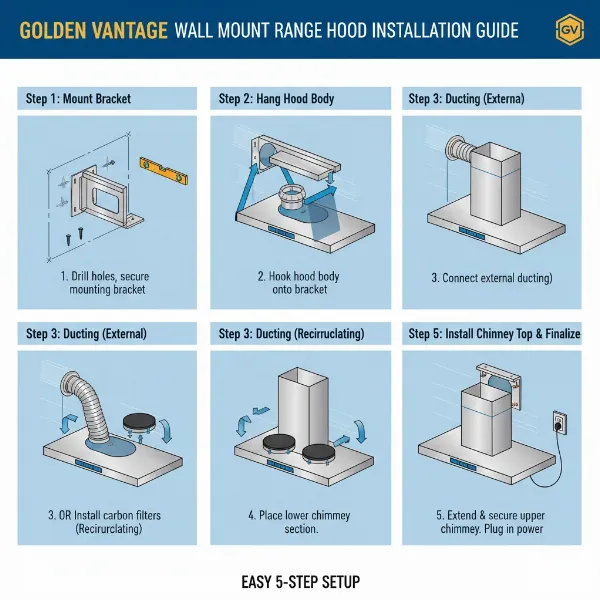
Choosing between a ducted and ductless range hood hinges on your kitchen’s structure, cooking habits, and budget. Ducted systems offer superior ventilation by expelling smoke, grease, and odors outdoors, ideal for serious cooks. Ductless models provide easier installation and flexibility, filtering air internally for kitchens where external venting is impossible.
Introduction: Ducted vs. Ductless – Your Kitchen’s Ventilation Dilemma
A range hood is indispensable for maintaining a clean, healthy kitchen environment. It removes airborne grease, smoke, and odors, protecting your home’s air quality and surfaces. The fundamental choice lies between ducted and ductless systems, each with distinct advantages and limitations. Understanding these differences is crucial for selecting the right ventilation solution for your specific needs in 2026.
What is a Ducted Range Hood and How Does It Work?
A ducted range hood, often called an externally vented hood, is the gold standard for kitchen ventilation. It operates by drawing air, smoke, grease, and cooking odors directly from your stovetop area. This contaminated air then travels through a series of ductwork, typically made of rigid metal, which leads outside your home. The system permanently removes pollutants, moisture, and heat from your indoor environment.
Ducted hoods utilize powerful fans, measured in Cubic Feet per Minute (CFM), to move large volumes of air. For instance, a professional-grade Viking Professional 5 Series Chimney Wall Hood can offer 600 CFM or more, effectively clearing even the heaviest cooking fumes. Proper duct sizing is critical; insufficient duct diameter or excessive bends can reduce CFM performance and increase noise. Standard duct sizes range from 6 to 10 inches, depending on the hood’s CFM rating. Installation requires careful planning, often involving cutting into walls or ceilings to accommodate the ductwork, making it more suitable for new constructions or major renovations.
What is a Ductless (Recirculating) Range Hood and How Does It Work?
A ductless range hood, also known as a recirculating or non-vented hood, offers a flexible alternative when external venting is impractical or impossible. Instead of expelling air outdoors, this system filters the air and recirculates it back into the kitchen. The process involves drawing in cooking fumes, passing them through a multi-stage filtration system, and then releasing the cleaned air.
Typically, ductless hoods employ two main types of filters: a grease filter (often aluminum mesh or baffle) to capture oil particles, and a charcoal (activated carbon) filter to absorb odors and smoke. While effective at trapping grease and some odors, ductless systems do not remove heat or moisture from the kitchen. Brands like Cosmo offer convertible models, but when used in ductless mode, they rely on these internal filters. The main advantage is simpler installation, as no external ductwork is needed, making them popular for apartments, condos, or kitchens with restrictive layouts. However, regular filter replacement is essential for maintaining performance, typically every 3-6 months depending on cooking frequency.
Ducted vs. Ductless: A Head-to-Head Comparison
Understanding the core differences is key to making an informed decision. Here’s a direct comparison:
| Feature | Ducted Range Hood | Ductless Range Hood |
|---|---|---|
| Effectiveness | Superior; removes 100% of contaminants, heat, moisture. | Moderate; filters grease/odors, recirculates air; no heat/moisture removal. |
| Installation | Complex; requires external ductwork, professional installation often recommended. | Simple; no ductwork needed, often DIY-friendly. |
| Cost (Initial) | Higher; includes hood, ductwork, and professional labor. | Lower; only hood purchase and simpler installation. |
| Cost (Long-term) | Lower; minimal consumables, energy-efficient operation. | Higher; recurring cost of charcoal filter replacements (every 3-6 months). |
| Air Quality | Excellent; removes harmful VOCs, CO, and particulates completely. | Good for grease/odors; recirculates some fine particles. |
| Noise Levels | Can be quieter at higher CFMs due to external venting, but duct design impacts this. Some models like Zephyr Monsoon II are designed for quiet operation. | Generally louder due to fan working harder against filters and recirculating air directly into the kitchen. |
| Maintenance | Grease filter cleaning (e.g., Vesta 860CFM uses baffle filters). Occasional duct cleaning. | Grease filter cleaning + regular charcoal filter replacement. |
| Flexibility | Limited by ductwork placement. | High flexibility; can be installed almost anywhere. |
Which Factors Should You Consider When Choosing a Range Hood in 2026?
Kitchen Layout and Structure
|
Our Picks for the Best Range hood in 2026
As an Amazon Associate I earn from qualifying purchases.
|
||
| Num | Product | Action |
|---|---|---|
| 1 | SNDOAS 30 inch Range Hood Ducted/Ductless Convertible Stainless Steel Range Hood Under Cabinet with Rocker Button Control,Vent Hood with LED Light,2 Speed Exhaust Fan,Under Cabinet Hood,Silver |

|
| 2 | IKTCH 30-inch Wall Mount Range Hood 900 CFM Ducted/Ductless Convertible, Kitchen Chimney Vent Stainless Steel with Gesture Sensing & Touch Control Switch Panel, 2 Pcs Adjustable Lights(IKP02-30'') |
|
| 3 | VIKIO HOME Wall Mount Range Hood 30 inch, 580 CFM, Ducted/Ductless Convertible, Stainless Steel Kitchen Vent Hood with 3-Speed Fan and LED Lights |
|
| 4 | AMZCHEF Under Cabinet Range Hood 30 Inch, 750CFM Stainless Steel Kitchen Stove Vent Hood 3 Speed Exhaust Fan Touch/Remote/Gesture Control LED lights Time Setting Dishwasher-Safe Baffle Filters |
|
| 5 | Broan-NuTone 413001 Non-Ducted Ductless Range Hood with Lights Exhaust Fan for Under Cabinet, 30-Inch, White |
|
| 6 | Empava Wall Mount Range Hood 30 Inch, Ducted/Ductless Kitchen Exhaust Stove Vent with Modern Style, 400CFM, 3-Speed, Touch Control, Timer, LED Lights, Stainless Steel (Charcoal-Filter Sold Separately) |
|
| 7 | COSMO COS-63175S 30 in. Vista Collection 380 CFM Ducted Wall Mount Range Hood, Touch Controls, LED Lights, Stainless Steel |
|
| 8 | COMFEE' CVU30W4AST 30 inch Under Cabinet Ducted/Ductless Convertible Slim Vent Durable Stainless Steel Kitchen Reusable Filter, 3 Speed Exhaust Fan and 1 LED Lights Range Hood, 2.0 Version |
|
| 9 | COMFEE' CVU30W2AST Range Hood 30 Inch Ducted Ductless Vent Hood Durable Stainless Steel Kitchen Hood for Under Cabinet with 2 Reusable Filter, 200 CFM, 2 Speed Exhaust Fan Silver |
|
| 10 | Broan-NuTone BCSQ130SS Three-Speed Glacier Under-Cabinet Range Hood with LED Lights ADA Capable, 1.5 Sones, 375 Max Blower CFM, 30-Inch, Stainless Steel |
|
Your kitchen’s physical constraints are paramount. Existing ductwork simplifies ducted installation. If you live in an apartment or condo, building codes or landlord restrictions might mandate ductless. Island ranges typically require island hoods, which are almost exclusively ducted for effective ventilation. Under-cabinet models like the Vesta 860CFM can be ducted or convertible, depending on your setup.
Cooking Habits
How often and what you cook significantly impacts your choice. If you frequently fry, sear, or cook with strong spices, a powerful ducted system (e.g., 900+ CFM for professional ranges) is essential. For light cooking, boiling, or occasional sautéing, a quality ductless hood might suffice. FOTILE AMG9007-i Intelligent Range Hood, while primarily ducted, showcases the advanced sensor technology now available for precise ventilation control.
Budget
Initial purchase and installation costs vary widely. Ducted systems typically have a higher upfront investment due to ductwork and professional labor. Ductless hoods are generally cheaper to buy and install. Factor in long-term costs: ducted hoods have minimal consumables, while ductless models require recurring charcoal filter replacements, which can add up over time.
Installation Complexity
Ducted hoods are complex; improper duct installation can severely compromise performance and increase noise. Professional installation is highly recommended. Ductless hoods are simpler, often suitable for a competent DIYer, reducing labor costs. Convertible models, like some Cosmo 63175 Wall Mount Range Hoods, offer flexibility but require a conversion kit for ductless use.
Local Building Codes and Regulations
Always check local building codes. Some areas have specific requirements for kitchen ventilation, especially regarding CFM, duct sizing, and make-up air systems for high-CFM hoods (typically above 400 CFM). Neglecting these can lead to failed inspections or safety hazards.
Noise Levels (Sones)
A quiet kitchen is a peaceful kitchen. Range hood noise is measured in Sones, where lower numbers indicate quieter operation. A good ducted hood might operate at 1-3 Sones on low speed, while a ductless unit often starts higher. High-performance ducted units like the Zephyr Monsoon II can be surprisingly quiet for their CFM, especially when paired with inline or external blowers.
Aesthetics and Design
Range hoods are prominent kitchen features. Modern designs, such as the sleek Viking Professional 5 Series, offer aesthetic appeal. Ductless hoods often have a more compact design, sometimes integrated into microwaves. Consider how the hood integrates with your kitchen’s overall decor, as explored in “Transform Your Kitchen: A Comprehensive Guide to Painting Your Range Hood to Match Your Decor.”
Smart Features (2026 Context)
The 2026 market offers advanced features. Look for auto-sensing technology that adjusts fan speed based on detected smoke or heat (e.g., FOTILE AMG9007-i). App control, voice commands, and integration with smart home ecosystems enhance convenience. While these features are available on both types, they often add a premium.
When is a Ducted Range Hood the Best Choice?
A ducted range hood is the optimal choice for specific scenarios:
- Serious Home Cooks: If you frequently engage in high-heat cooking, frying, or stir-frying.
- New Construction or Major Renovation: When you have the opportunity to plan and install proper ductwork.
- Professional-Style Kitchens: To match the performance of high-BTU gas ranges and cooktops.
- Superior Air Quality: For complete removal of smoke, grease, odors, heat, and moisture.
- Long-Term Value: Lower recurring costs and better overall performance over the hood’s lifespan.
- Quieter Operation: High-quality ducted hoods often achieve lower Sone ratings at comparable extraction levels.
When is a Ductless Range Hood the Right Solution?
Ductless range hoods fill a crucial niche where ducted installation is not feasible:
- Apartments or Condos: Where external venting is prohibited by building regulations or landlord rules.
- Minor Kitchen Refreshes: When you need an upgrade without major structural modifications.
- Budget Constraints: For a lower initial investment in ventilation.
- Light Cooking Habits: Suitable for occasional, less intensive cooking.
- Installation Flexibility: When you need to place a hood without access to an exterior wall or roof.
- Temporary Setups: For short-term living situations where permanent modifications are undesirable.
Are Hybrid (Convertible) Range Hoods a Viable Option?
Yes, hybrid or convertible range hoods offer flexibility, allowing them to be installed as either ducted or ductless systems. Many popular models, including some from Cosmo, ZLINE, and Broan, come with the necessary components or optional kits for conversion. This provides a safety net if your future kitchen layout changes or if you move. However, it’s crucial to understand that while convertible, a hood’s design might be optimized for one mode over the other. For instance, a hood designed for high CFM ducted performance might be less efficient and louder when converted to ductless mode due to the added resistance of charcoal filters. Always verify the performance specifications for both modes before purchasing.
Specific Brands and Models to Consider in 2026
The 2026 market offers outstanding options for both ducted and ductless needs:
For Ducted Systems, consider high-performance brands like Viking Professional (e.g., 5 Series Chimney Wall Hood for robust extraction), Zephyr (known for quiet operation and sleek design, like the Monsoon II insert), and ZLINE (offering excellent value with strong CFM and durable construction). Look for models with 600-1200+ CFM, depending on your range’s BTU output. XO also provides premium ducted solutions with sophisticated aesthetics.
For Ductless or Convertible Systems, brands such as Cosmo (e.g., 63175 Wall Mount or 5MU30 Under Cabinet, which are convertible), Broan (a long-standing leader in ventilation, offering many convertible options), and FOTILE (some models like the AMG9007-i can be converted, though their true strength lies in ducted performance) are reliable choices. When going ductless, prioritize models with high-quality, easily replaceable charcoal filters and good grease filtration. While the Vesta 860CFM is a powerful ducted unit, other Vesta models might offer convertible functionality for those specific needs.
Frequently Asked Questions
Can I convert a ductless hood to ducted?
Generally, no. A true ductless hood is designed solely for recirculation and lacks the necessary motor and housing for external duct connection. However, many “convertible” hoods exist, meaning they can function as either ducted or ductless with an optional kit. Always check product specifications before purchase.
How often do I change filters in a ductless hood?
Charcoal filters in a ductless hood should be replaced every 3 to 6 months, depending on your cooking frequency and intensity. Grease filters (metal mesh or baffle) are typically washable and should be cleaned monthly to maintain optimal performance.
What CFM do I need for a ducted hood?
A common guideline is 100 CFM per 10,000 BTUs for gas ranges, or 100 CFM per 10 inches of stove width for electric ranges. For heavy cooking or professional-style ranges, aim for 600 CFM or higher. Always consult specific recommendations for your cooking appliance and kitchen size.
Do ductless hoods really work for heavy cooking?
Ductless hoods are generally not recommended for heavy or frequent cooking that produces significant smoke, grease, or strong odors. While they filter some pollutants, they do not remove heat or moisture and are less effective than ducted systems. For serious cooking, a ducted hood is unequivocally superior.
Are smart features worth it for range hoods?
Smart features like auto-sensing fan speed, app control, and voice activation enhance convenience and optimize performance. For many users, the ability to automatically adjust ventilation or pre-program settings offers significant value, especially in busy modern kitchens. The FOTILE AMG9007-i demonstrates how intelligent features can genuinely improve the cooking experience.
Conclusion
The choice between a ducted and ductless range hood is a foundational decision for your kitchen’s air quality and comfort. Ducted systems offer unmatched performance, permanently removing cooking contaminants for a truly fresh environment. Ductless models provide essential ventilation where external venting isn’t possible, offering flexibility and easier installation. Evaluate your cooking style, kitchen structure, budget, and long-term needs to make an informed decision that ensures a healthier, more enjoyable kitchen experience for years to come.