A dripping range hood can turn your kitchen into a greasy, unpleasant space, or worse, indicate a serious issue with your ventilation system. Whether it is unsightly water condensation or stubborn grease, understanding the root cause is the first step toward a clean, functional kitchen. As an experienced technician with a decade in the field, I’ve seen countless range hood issues, and I am here to guide you through diagnosing and fixing this common problem.
Identifying the Culprit: Water or Grease?
Table is empty.Before diving into solutions, it’s crucial to determine if your range hood is dripping water (condensation) or grease. A quick visual inspection usually provides the answer: clear, odorless drops point to condensation, while thick, yellowish-brown, or sticky drips are almost certainly grease. Each issue stems from distinct problems requiring different approaches.
Understanding Why Your Range Hood is Dripping Water (Condensation)
Condensation forms when warm, moist air meets a cooler surface, causing water vapor to change back into liquid form. In a kitchen, this often happens when steam from cooking rises into a range hood or ductwork that is significantly colder than the vapor itself.
Common Causes of Water Dripping
Several factors contribute to condensation and subsequent water dripping from your range hood:
- Damaged or Improperly Installed Damper: The damper is a critical component that regulates airflow and prevents cold outside air from entering the ductwork when the hood is not in use. If it’s broken, missing, or installed incorrectly, cold air can infiltrate, leading to condensation.
- Insufficient Duct Insulation: If your ductwork runs through unheated spaces like an attic or an exterior wall cavity, the duct surface can become very cold. When hot, humid air from cooking passes through, it rapidly cools and condenses on the uninsulated surfaces, forming water droplets that eventually drip down.
- Incorrect Venting Angles or Ductwork Problems: Poorly installed ductwork, such as those with improper angles or excessive bends, can create pockets where steam accumulates instead of being efficiently expelled. This trapped steam then condenses. External factors like rain or snow backflow into improperly positioned exhaust ducts can also cause water ingress. Over time, aging or damaged duct materials can also contribute to leaks.
- External Leaks in the Roof or Wall: While less common, sometimes water dripping from your range hood isn’t directly related to the hood’s function but rather a leak in the roof or the wall where the ductwork penetrates the exterior. Broken shingles or sealant failures can allow rainwater to seep in.
- Temperature Difference with Induction Hobs: Condensation can be more pronounced when cooking with induction hobs compared to gas hobs. Induction cooktops primarily heat the cookware and its contents, not the surrounding air. This means less ambient heat reaches the ductwork, keeping its surfaces cooler and more prone to condensation when steam rises. Gas hobs, conversely, heat the surrounding air, which helps warm the duct and reduce condensation.
> “Condensation issues are often a battle against temperature differentials. The key is to minimize the contrast between the moist air being extracted and the surfaces it contacts within the ventilation system.” – Dr. Elena Petrova, Environmental Engineer specializing in Indoor Air Quality
Troubleshooting and Solutions for Water Dripping
Addressing condensation involves improving ventilation, insulation, and ensuring proper installation.
- Inspect and Repair the Damper: Check the damper for any damage, blockages, or improper seating. Ensure it opens fully when the hood is on and closes completely when it’s off. Repair or replace it if necessary.
- Insulate Your Ductwork: If ducts run through cold areas, insulating them is crucial. Use appropriate duct insulation sleeves or wraps to maintain the temperature of the ductwork, preventing the rapid cooling of humid air.
- Check and Correct Ductwork Installation: Ensure your ductwork is installed with minimal bends and a slight downward slope towards the exterior exit. This allows any condensation to drain outside rather than back into the hood. Verify the exhaust duct position and consider adding or adjusting a rain cover to prevent external water backflow.
- Address External Leaks: If you suspect a roof or wall leak, it’s vital to have a professional inspect and repair the exterior envelope of your home to prevent water intrusion.
- Improve Ventilation Habits:
- Run the Hood Longer: Continue running your range hood for 5-10 minutes after cooking to clear remaining steam and warm the ductwork.
- Use Lids: Cover pots and pans when boiling or simmering to minimize steam release into the kitchen air.
- Increase Air Circulation: Open a window slightly in the kitchen (if outdoor temperatures permit) to introduce fresh air and reduce overall humidity during cooking.
- Use the Right Hood Size: Ensure your range hood is adequately sized for your cooktop and kitchen volume to effectively capture and exhaust steam.
Understanding Why Your Range Hood is Dripping Grease
Grease dripping from a range hood is a clear sign of inadequate filtration or maintenance. Over time, cooking vapors carry grease particles that are captured by filters. When these filters become saturated, they can no longer hold the grease, leading to drips.
Common Causes of Grease Dripping
- Dirty or Clogged Filters: This is the most common culprit. Range hood filters are designed to trap grease particles. If they aren’t cleaned regularly, they become saturated, lose effectiveness, and allow accumulated grease to drip back onto your stovetop or countertop.
- Lack of Regular Maintenance: Beyond filters, grease can accumulate in other parts of the range hood and ductwork. Infrequent cleaning allows this buildup to solidify and eventually drip.
- Full or Missing Grease Cups/Traps: Some range hood models include specific grease cups or traps designed to collect excess oil. If these are full or, in some cases, missing or improperly installed, grease has nowhere to go but down.
- Aging or Inefficient Unit: Older range hoods may not have the suction power or filtration efficiency of newer models. Over time, components can degrade, leading to less effective grease capture and more dripping. If the fan motor is weak, it may not push air through the filter effectively, allowing grease to accumulate and drip.
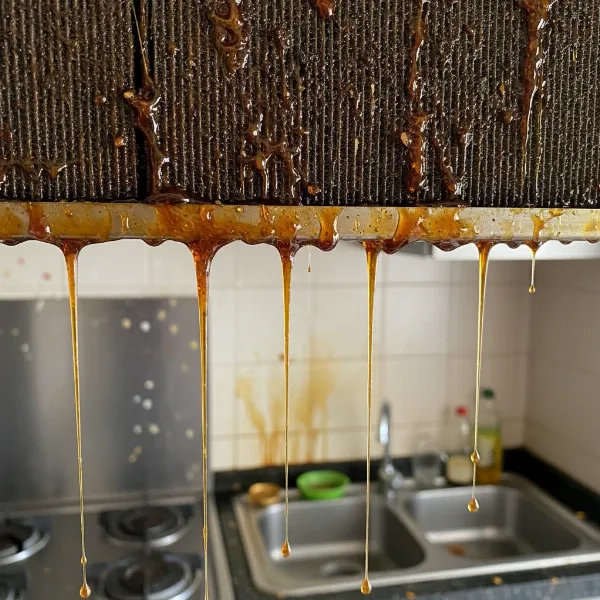 A close-up of a range hood filter heavily saturated with dripping grease, highlighting the need for cleaning.
Troubleshooting and Solutions for Grease Dripping
Preventing grease drips largely comes down to consistent cleaning and proper system function.
- Clean or Replace Filters Regularly: This is paramount. Most range hoods use metal mesh filters that are dishwasher-safe or can be cleaned by hand with hot, soapy water and a degreaser. For charcoal filters (common in recirculating hoods), these are typically disposable and need to be replaced periodically according to the manufacturer’s recommendations. The frequency depends on your cooking habits, but generally, mesh filters should be cleaned monthly, and charcoal filters replaced every 3-6 months.
- Regular Deep Cleaning of the Hood Interior: Beyond filters, wipe down the interior surfaces of your range hood, including the fan blades and housing, with a degreasing cleaner. Grease can accumulate here and eventually fall.
- Empty and Clean Grease Cups/Traps: If your model has them, make it a habit to regularly empty and clean these components. They are designed to be easily removable for this purpose.
- Inspect Ductwork for Grease Buildup: While harder to access, significant grease buildup in the ductwork itself can also be a source of dripping, especially in older systems or those with very heavy cooking. If you suspect this, professional duct cleaning may be required.
- Consider a Hood Upgrade: If your range hood is old, lacks sufficient power, or is consistently dripping grease despite diligent cleaning, it might be time to consider an upgrade to a more efficient model with better filtration and extraction capabilities.
When to Call a Professional
While many dripping issues can be resolved with DIY cleaning and minor adjustments, some problems warrant professional attention:
- Persistent Leaks: If water dripping continues after checking for damper issues, insulation, and obvious external leaks, a professional can conduct a thorough inspection of the ductwork and roof connections.
- Complex Ductwork Problems: Issues with incorrect duct installation, significant blockages, or damaged duct materials often require specialized tools and expertise to repair or replace.
- Motor or Fan Malfunctions: If the range hood’s suction power is noticeably weak, indicating a problem with the motor or fan, a qualified appliance technician should diagnose and fix the issue.
- Safety Concerns: If you observe electrical issues, unusual noises, or structural damage, immediately contact a professional to ensure safety.
Conclusion
A dripping range hood is more than just an inconvenience; it signals an underlying issue that needs attention, whether it’s condensation from improper ventilation or grease buildup from neglected maintenance. By understanding the distinct causes of water and grease drips, you can effectively troubleshoot the problem. Regular cleaning of filters and the hood interior, ensuring proper duct insulation and installation, and prompt attention to damper or external leaks are key to maintaining a dry, clean, and efficient kitchen environment. Don’t let a small drip turn into a larger problem – your kitchen (and your nose!) will thank you.
What steps will you take today to ensure your range hood stays drip-free and your kitchen remains a fresh, pleasant space for cooking?
Frequently Asked Questions
Can a dirty range hood cause water to drip?
While a dirty range hood is primarily associated with dripping grease, it can indirectly contribute to water condensation. Accumulated dirt and grease can impede airflow, making the range hood less efficient at expelling steam, which then increases the likelihood of condensation forming on cooler surfaces within the system. Ensuring clean filters and pathways promotes better ventilation.
How often should I clean my range hood filters to prevent dripping?
For most households, it’s recommended to clean metal mesh range hood filters monthly. If you cook frequently, especially with high-grease foods, you might need to clean them bi-weekly. Charcoal filters, used in recirculating hoods, are typically replaced every three to six months, depending on usage. Regular cleaning or replacement is vital to prevent grease saturation and dripping.
Is it normal for a range hood to have condensation?
Some condensation can be normal, especially when cooking heavily with steam (like boiling water). However, excessive or constant condensation that leads to dripping indicates a problem, often related to insufficient insulation in the ductwork, a faulty damper, or inadequate ventilation that prevents the moist air from being properly expelled.
Can cold weather make my range hood drip water?
Yes, cold weather can significantly worsen range hood condensation. When the outdoor temperature is much lower than the warm, humid air inside your kitchen, the ductwork running through unheated spaces becomes colder. This increased temperature difference promotes rapid condensation, causing water droplets to form and drip more frequently.
What is a damper in a range hood, and how does it prevent dripping?
A damper is a flap or valve, typically located at the duct exit, that opens when the range hood operates and closes when it’s off. Its purpose is to prevent cold outside air from entering the ductwork and kitchen, which helps maintain a warmer duct temperature. A properly functioning damper prevents cold air infiltration that can lead to condensation and dripping.
Should I insulate my range hood duct?
Yes, insulating your Range Hood duct is highly recommended, especially if it passes through unheated areas like attics, crawl spaces, or exterior walls. Insulation helps maintain the temperature of the ductwork, preventing the rapid cooling of warm, moist air and significantly reducing the likelihood of condensation forming and dripping.