Navigating the world of kitchen appliances can be daunting, especially when every inch of space matters. Among the most crucial, yet often overlooked, elements is the range hood. It plays a vital role in maintaining air quality and cleanliness, but its size and design can significantly impact your kitchen’s aesthetics and functionality. Are you struggling to decide between a sleek, nearly invisible slide-out model and a robust, always-present fixed unit? This comprehensive guide will dissect the nuances of both slide hood types, offering expert insights and practical space-saving tips to help you make the perfect choice for your culinary haven.
Understanding Range Hoods: Slide-Out vs. Fixed
The fundamental difference between slide-out and fixed range hoods lies in their visibility and how they integrate into your kitchen design. Each offers distinct advantages and disadvantages, particularly concerning space utilization and performance.
Slide-Out (Retractable) Range Hoods
Slide-out range hoods, also known as retractable or telescopic hoods, are the epitome of discreet design. These units are cleverly installed into your kitchen cabinetry, typically above the cooktop, and feature a panel that slides out when the hood is in use. Once cooking is finished, the panel retracts, making the hood virtually disappear into the surrounding cabinets.
Pros:
- Space-Saving Design: Their primary appeal is their ability to blend seamlessly into cabinetry, freeing up visual and physical space, which is especially beneficial in smaller kitchens or those with an open-plan layout. [cite: 1, 1.1, 1.3]
- Minimalist Aesthetic: When retracted, these hoods offer a clean, uncluttered look, perfect for modern and minimalist kitchen designs. [cite: 2, 4, 1.1]
- Cabinet Access: Unlike some fixed models, slide-out hoods allow you to retain the use of the cupboard space above the cooktop, ensuring no valuable storage is lost. [cite: 1.1]
- Automatic Operation: Many slide-out models feature a fan and light that automatically activate when the hood is pulled out, adding to user convenience. [cite: 2, 3.3]
Cons:
- Reduced Effectiveness: Due to their often smaller air collection and filter areas, slide-out hoods are generally less effective at extracting smoke, steam, and odors compared to larger fixed or canopy models. This limitation can be particularly noticeable in recirculating mode.
- Lower Power Output: They may have a lower extraction rate (m³/hr or CFM) than more powerful canopy-style range hoods.
- Cleaning Challenges: Some designs might have more crevices, potentially making the exterior harder to clean than a simple fixed unit.
Slide-out range hoods are an excellent choice for those prioritizing aesthetics and maximizing cabinet space, particularly in compact kitchens or apartments where a minimalist design is desired.
Fixed Range Hoods
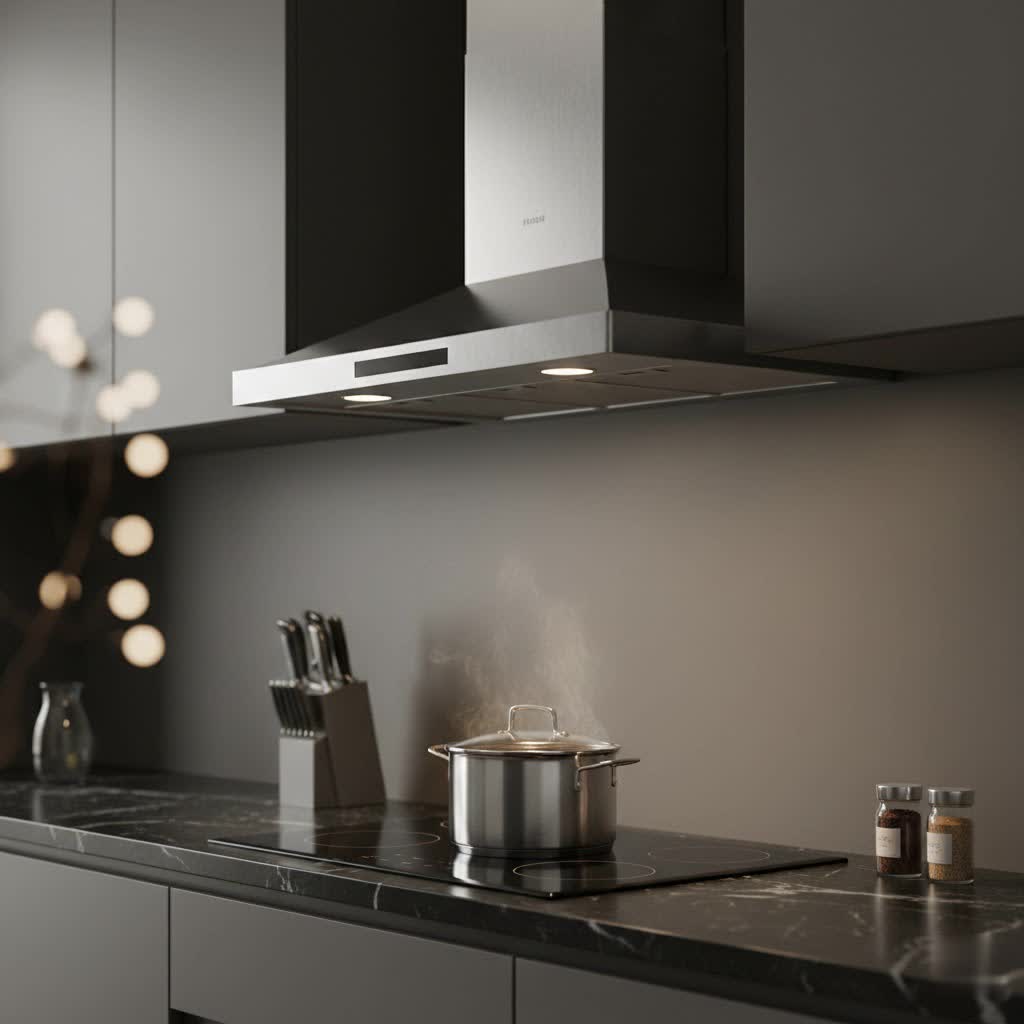
Fixed range hoods are permanently installed fixtures above your cooktop. This category includes wall-mounted, under-cabinet (non-retracting), and island canopy hoods. They remain visible at all times, making them a prominent feature in the kitchen.
Pros:
- Superior Performance: Fixed hoods typically offer a larger capture area and filter size, leading to more effective extraction of cooking fumes, grease, and steam in both ducted and recirculating modes. [cite: 1, 3, 1.1, 1.2]
- Higher Power Options: Many fixed models boast higher CFM ratings, making them ideal for avid cooks or those with high-BTU cooktops.
- Cost-Effective: Certain fixed under-cabinet models can be among the most budget-friendly range hood options available. [cite: 2.2]
- Easier Maintenance: Their simpler, less complex construction can sometimes make fixed hoods easier to clean and maintain on the exterior.
Cons:
- Visual Prominence: Fixed range hoods are always on display and can sometimes appear bulky or interrupt the visual flow of a small kitchen, especially if a minimalist aesthetic is preferred. [cite: 3, 1.1]
- Space Intrusion: Depending on the design and installation height, a fixed hood might feel like it “gets in the way,” particularly if it extends too far into head height.
- Cabinet Sacrifice: Wall-mounted fixed hoods require open space above the cooktop, meaning you might lose potential upper cabinet storage.
Fixed range hoods are best suited for kitchens where powerful ventilation is a top priority, and where the visual presence of the appliance is either embraced as a design feature or less critical than its functional capabilities.
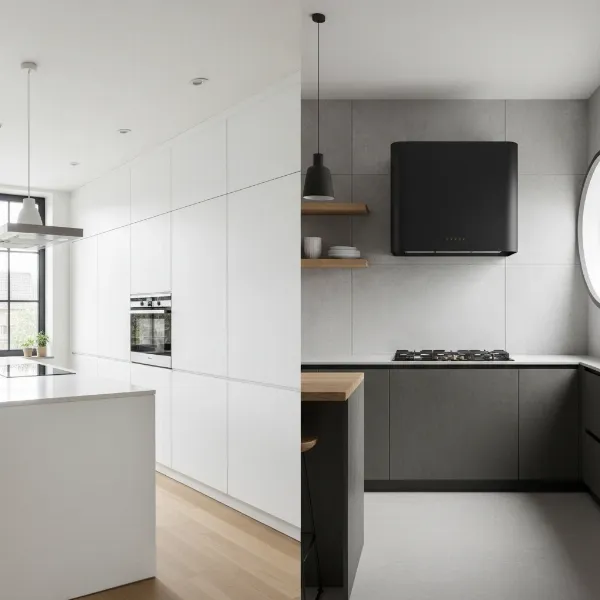 A modern kitchen showcasing both a hidden slide-out range hood and a sleek fixed range hood side-by-side to illustrate space-saving and design differences.
Key Factors for Choosing a Space-Saving Range Hood
Selecting the right range hood for a space-conscious kitchen involves more than just deciding between slide-out and fixed. Several other critical factors contribute to both its efficiency and how well it integrates into your limited space.
Extraction Power (CFM) and Noise Level
The effectiveness of a range hood is largely determined by its Cubic Feet per Minute (CFM) rating, which indicates how much air it can move. For light to moderate cooking on a standard 24-30 inch cooktop, a hood in the 200-350 CFM range often suffices. However, for heavier cooking, frequent frying, or high-heat methods, a higher CFM of 400-600 is advisable to effectively remove smoke and odors. [cite: 1.4, 4.4]
In smaller kitchens, where sounds tend to echo and amplify, the noise level of a range hood is a crucial consideration. Look for models with low decibel ratings to ensure a more pleasant cooking and living environment. A quiet operation is paramount to maintaining a comfortable atmosphere in compact spaces. [cite: 4.4, 5.5]
Size and Ventilation Type
Proper sizing is non-negotiable for effective ventilation and aesthetic balance. Your range hood should ideally be at least as wide as your cooktop to ensure optimal capture of cooking fumes. An oversized hood can visually overwhelm a small kitchen, while an undersized one will be ineffective, failing to capture all the smoke and steam. [cite: 4.4]
Regarding ventilation type, you typically have two options:
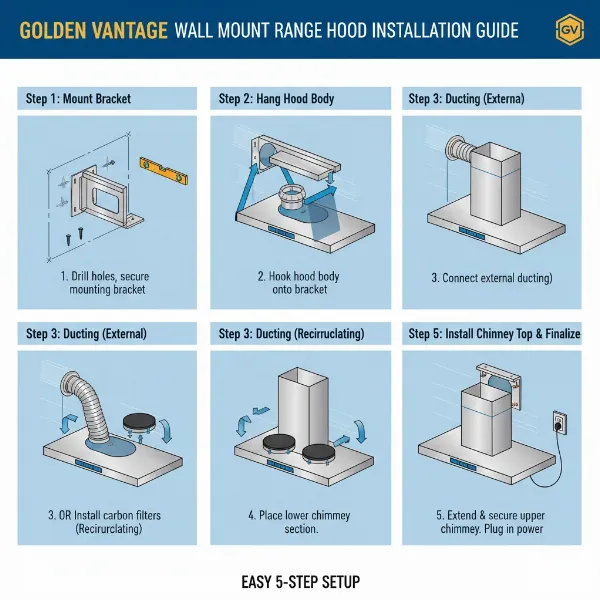
- Ducted: This system vents cooking air directly outside through ductwork. It’s the most effective method for removing grease, odors, and moisture, offering superior air quality.
- Recirculating (Ductless): These hoods filter the air using charcoal filters and then return the cleaned air into the kitchen. While easier to install (no external ductwork needed), they are generally less powerful and require regular filter replacement. They are often a practical choice for apartments or kitchens where external venting is not feasible due to structural limitations. [cite: 3.4, 2.2, 5.5]
Consider the available space for ductwork when making your choice. If extensive modifications are not possible, a high-quality recirculating slide-out hood might be your best space-saving solution.
Design Integration and Maintenance
For space-conscious kitchens, design integration is key. Range hoods can be completely integrated into existing cabinetry or disguised within architectural elements to minimize their visual impact. Painting a simple rectangular hood to match the wall can also create a seamless look, making it less noticeable. [cite: 3.4, 3.5, 4.5]
Maintenance is another practical consideration. Look for range hoods with washable filters and smooth, easily accessible surfaces to simplify cleaning. Fixed models, with their often simpler construction, can sometimes be easier to clean on the exterior than their retractable counterparts, which may have more crevices. Easy filter access is vital for consistent performance, regardless of hood type.
Expert Tips for Maximizing Kitchen Space with Your Range Hood Choice
Beyond the type of range hood, strategic placement and clever integration can unlock significant space-saving benefits in any kitchen.
Strategic Placement and Cabinetry Integration
When space is at a premium, thoughtful placement and integration with your existing cabinetry are paramount. For slide-out hoods, ensure they are seamlessly built into upper cabinets. This not only conceals the appliance but also maintains the continuity of your kitchen design. The design should allow for easy access to the adjacent cabinets, ensuring that the hood doesn’t impede storage. For a truly hidden look, consider installing the slide-out mechanism within a shallow cabinet, designed to perfectly match the surrounding units.
If you opt for a fixed under-cabinet range hood, ensure it’s shallow enough not to protrude excessively, maintaining clear sightlines and working space. In certain cases, building a custom enclosure around an insert-style range hood can help it blend in, minimizing the amount of visible stainless steel and allowing it to harmonize with your chosen kitchen aesthetic.
Beyond Slide-Out: Exploring Other Integrated Options
While slide-out hoods are excellent for invisibility, other integrated options also offer space-saving advantages:
- Undermount Range Hoods: These are fixed units installed discreetly beneath a cabinet. They offer a more permanent installation than slide-outs but still keep the hood largely out of sight, maximizing cabinet space above. They are an increasingly popular choice for their unobtrusive nature.
- Hidden Insert Hoods: These are essentially the internal workings of a range hood, designed to be built into a custom cabinet or decorative cover. This allows for complete customization of the exterior, making the hood blend perfectly with your kitchen’s style, often appearing as just another part of the cabinetry. This approach allows you to preserve storage on either side of the hood while keeping it invisible until needed. [cite: 1.4]
- Downdraft Range Hoods: These innovative systems are hidden within the countertop or cooktop itself and rise when in use, drawing fumes downwards. They are excellent for island cooktops or kitchens where overhead space is completely unavailable, though they can be less effective at capturing rising steam and can be more expensive. [cite: 3.2]
The key is to think about how the hood interacts with its environment. Choosing built-in appliances and integrating your range hood into a niche or custom enclosure can create a more peaceful and spacious feel in a small kitchen.
Top Considerations for Efficient, Space-Saving Range Hoods
When seeking an efficient, space-saving range hood, prioritize models that strike a balance between powerful performance and discreet design. Look for units that offer:
- High CFM in a Compact Form: Seek out slide-out or integrated insert models that deliver robust extraction power without requiring a large, bulky housing. Many modern designs utilize advanced fan technology to achieve high performance in a smaller footprint.
- Quiet Operation: A powerful fan doesn’t have to be loud. Manufacturers are increasingly focusing on quieter motors and sound-dampening technologies. A quiet hood is a luxury in any kitchen, but a necessity in a small, open-plan space.
- Effective Filtration: Ensure the filters are easily removable and washable, or simple to replace for recirculating models. High-quality grease filters (e.g., baffle or mesh) are crucial for maintaining cleanliness and air quality.
- Smart Features: Features like automatic on/off when sliding, variable fan speeds, and bright LED lighting can significantly enhance the user experience and overall functionality. Energy-efficient LED lights are particularly valuable for task lighting over the cooktop. [cite: 5.5]
- Durable Materials: Stainless steel and tempered glass are popular choices for their durability and ease of cleaning, ensuring your range hood remains functional and stylish for years to come.
“In small kitchen design, the range hood shouldn’t compete for attention. It should seamlessly complement the space, providing essential ventilation while disappearing into the background when not in use. Prioritizing clever integration over visual bulk is key.” – Emma Roberts, Senior Kitchen Designer
Conclusion
Choosing between a slide-out and a fixed range hood in a space-conscious kitchen ultimately comes down to balancing your priorities: the desire for a minimalist aesthetic and maximum cabinet utility versus the need for superior extraction power and potentially simpler maintenance. Slide-out models excel at discreet integration and maintaining an uncluttered look, making them ideal for modern, compact spaces. Fixed hoods, while more visible, generally offer higher performance for robust cooking. By carefully considering factors such as CFM, noise level, size, and ventilation type, along with clever design integration tips, you can select a range hood that not only efficiently clears your kitchen air but also enhances its overall spaciousness and style. Which range hood style do you think would best complement your kitchen’s unique character and your cooking habits?
Frequently Asked Questions
What is the ideal CFM for a range hood in a small kitchen?
For light to moderate cooking in a small kitchen, a range hood with 200-350 CFM is usually sufficient. However, if you frequently engage in heavy frying or high-heat cooking, opting for a model between 400-600 CFM will provide more effective smoke and odor removal, ensuring your compact space remains fresh and clean.
Can a slide-out range hood be as effective as a fixed one?
While slide-out range hoods offer excellent space-saving benefits, they are generally less effective than fixed models due to their smaller capture area and filter size. For maximum extraction, especially with intense cooking, a fixed range hood with a larger coverage area will typically outperform a slide-out model.
How can I make my range hood blend into a minimalist kitchen?
To make your range hood blend seamlessly into a minimalist kitchen, consider fully integrated slide-out or insert models that are concealed within cabinetry. Alternatively, choose a fixed hood with a simple, narrow profile and paint its enclosure to match your kitchen walls or cabinetry, minimizing its visual impact.
Is a ducted or ductless range hood better for small kitchens?
A ducted range hood is always more effective for air quality, venting smoke and odors outside. However, if ducting is impossible due to space or structural constraints, a high-quality ductless (recirculating) Range Hood is a viable alternative for small kitchens. Remember to regularly clean or replace its charcoal filters for optimal performance.